Stay Updated
Subscribe to our newsletter to receive updates on new tools, features, and helpful guides.
A pure white screen fills your entire display — making it easy to spot dead pixels, stuck pixels, backlight bleeding, and dust in seconds. Free and instant — no software to install, no account needed. Works on any device: monitor, laptop, phone, or tablet.
Subscribe to our newsletter to receive updates on new tools, features, and helpful guides.
A white screen is a simple browser tool that fills your display with a solid white background. Open it in fullscreen to check a monitor, laptop, phone, or tablet for dark pixels, dust, color tint, and uneven brightness. You can also use it as a clean background, a temporary light source, or a downloadable white image.
The tool works instantly without an app, account, or installation. A visual screen test can reveal possible problems, but it cannot measure exact brightness or color accuracy and cannot identify the cause of every display issue.
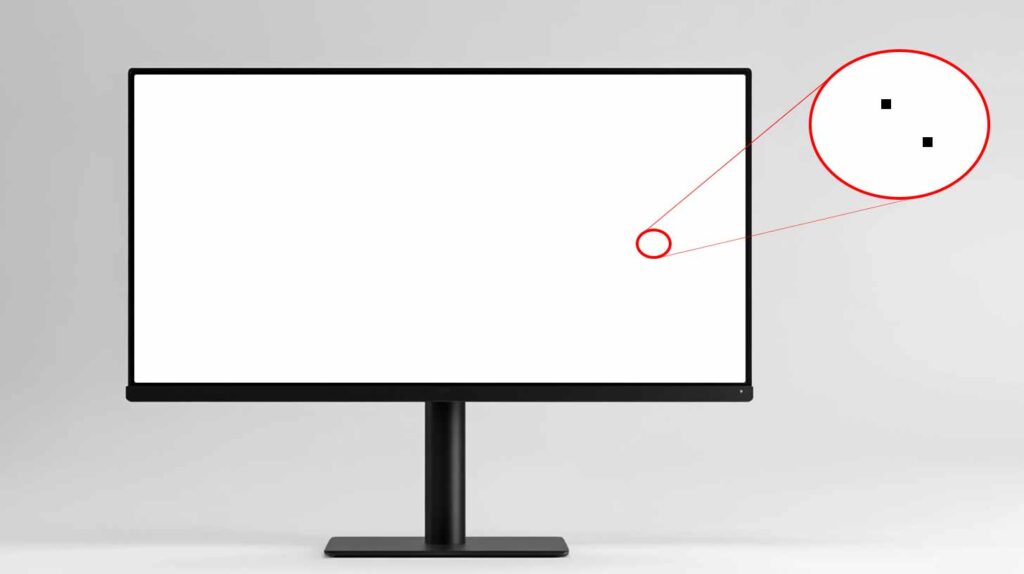
A defective pixel is easier to notice against a plain background than during a movie, game, or web page. A pixel that remains dark may appear as a tiny black dot on white. A stuck pixel may remain red, green, blue, or another fixed color.
If you see a suspicious spot, clean the screen carefully and test it again with several solid colors. This helps distinguish a pixel defect from dirt on the panel. Do not press or rub the spot: pressure can damage the display. The white screen helps you locate a problem, but it does not repair pixels.
A full white field makes it easier to compare the center, edges, and corners of a display. Look for areas that appear darker, warmer, cooler, pinker, or greener than the rest of the screen.
Small differences do not always mean the display is defective. Panel type, viewing angle, local dimming, color settings, and ambient light can affect what you see. For a more detailed check, open the screen uniformity test.
A bright, uncluttered background exposes surface marks that may disappear against photos or dark interfaces. Use the white screen after cleaning to check whether dust, fingerprints, or streaks remain. Turn the device off before cleaning it and follow its care instructions.
A bright white screen can act as a temporary fill light for a video call, webcam recording, portrait, or small product photo. Place the display in front of you and adjust its brightness until the light looks comfortable. A consumer display is not a calibrated studio light, so its color and brightness may not be accurate enough for color-critical work.
Use fullscreen mode when you need a blank white background for a presentation, projection, product photo, or distraction-free workspace. On a phone or tablet, the screen can also provide temporary light in a dark area, although the device’s flashlight will usually be brighter.
A white display can illuminate thin paper for tracing or frame-by-frame drawing. Place the paper gently on the screen and use very light pressure. Do not place heavy objects on the display or use sharp tools against it.
Need a white background instead of the interactive tool? Choose a preset resolution—including 480p, 720p, 1080p, 2K, 4K, or 8K—or enter custom dimensions, then select Download. The resulting image can be used as a wallpaper, editing background, presentation slide, or offline test image.
For an on-screen test, use the fullscreen preview rather than a downloaded image. Fullscreen mode removes most browser interface elements and makes the panel easier to inspect.
| Screen | Best used for |
|---|---|
| White screen | Dark pixels, dust, tint, and brightness uniformity |
| Black screen | Backlight bleed, edge glow, light leakage, and bright pixels |
| Red, green, and blue | Pixels or subpixels that do not display one color correctly |
| Gradients | Color banding and uneven tonal transitions |
A white background is not the correct test for backlight bleed. On an LCD display, use a black screen in a dim room and inspect the edges and corners for unwanted light. Photos taken with a phone may exaggerate the effect, so judge the display primarily with your eyes from a normal viewing position.
Open the white screen tool and click the large white preview or fullscreen icon. The white area will expand to cover the display. Press Esc on a computer to exit. On a phone or tablet, use the browser’s fullscreen option when available.
It can help you locate pixels that remain dark or show the wrong color. Confirm the result by checking the same spot with black, red, green, and blue screens. What looks like a defective pixel on one background may be dust, a reflection, or a mark on the panel.
No. The tool displays test colors; it does not repair the display. If a suspected defect remains visible across several tests, review the manufacturer’s pixel policy, warranty, and support options.
The display’s color-temperature setting, Night Light or similar eye-comfort modes, ambient light, viewing angle, or panel uniformity can change the appearance of white. Temporarily disable color-altering modes if you want to inspect the display’s default white point, and restore your preferred settings afterward.
No. It can help you compare brightness visually across the panel, but measuring luminance requires a meter. The brightness of a display is commonly expressed in candelas per square meter, often called nits.
Short display checks at a comfortable brightness are generally fine. A bright screen can cause discomfort in a dark room, and extended use at maximum brightness increases power consumption and may make a device warmer. Lower the brightness if full intensity is unnecessary.
Yes. The tool runs in a browser and works on desktop monitors, laptops, phones, tablets, TVs with a web browser, and many projectors. Browser controls and fullscreen behavior may differ by device.
The video provides a continuous white background for extended use. For a quick pixel or uniformity check, the interactive fullscreen tool at the top of the page is faster and avoids video controls and compression.